

Continuing medical education (CME) is evolving into a box-ticking exercise to a data-driven, engine of improving patient care. Learning accompanies clinicians in a digital world into the clinic, on their phones, and into virtual space- customized, interactive, and measurable. The future is of CME that is closely connected with the actual results, not only credit hours.
From Hours to Outcomes
The traditional CME was a reward of hours, rather than change of practice. The new model is impact oriented: Did antibiotic use become more suitable? Did complication rates fall? Digital platforms are able to match learning modules with quality measures, and thus a sepsis course is completed by monitoring sepsis bundle compliance or mortality. Programs with demonstrable improvement will become more attractive to accreditation, funding and clinician devotion- dragging the discipline towards outcome-based design.
Personalized, Adaptive Learning
Massive conferences are being replaced by customized learning experiences. Adaptive platforms change the difficulty of content and focus depending on individual specialty, quiz results, and self-reported gaps. A cardiologist may get advanced heart-failure material, whereas the generalist obtains brief refresher tracks. There are short diagnostic quizzes, practice audits, and self-assessment tests, which serve as a feed into a profile, which, in turn, redefines what gets suggested to them next, making CME feel not generic.
Microlearning and Point-of-Care Education
Clinicians who are time-poor should be provided with learning that can fit in minutes and not days. It will mostly be microlearning, 5-10-minute videos, cases, and interactive questions, administered using mobile applications, email notifications, and embedded EHR prompts. Point-of-care education eliminates the distinction between reference and CME: a clinician can find a guideline within the record and fill out a brief scenario and at the same time solve a patient issue and receive credit. This just-in-time model enhances retention in the sense that learning is connected with actual decisions.
Immersive and Collaborative Technologies
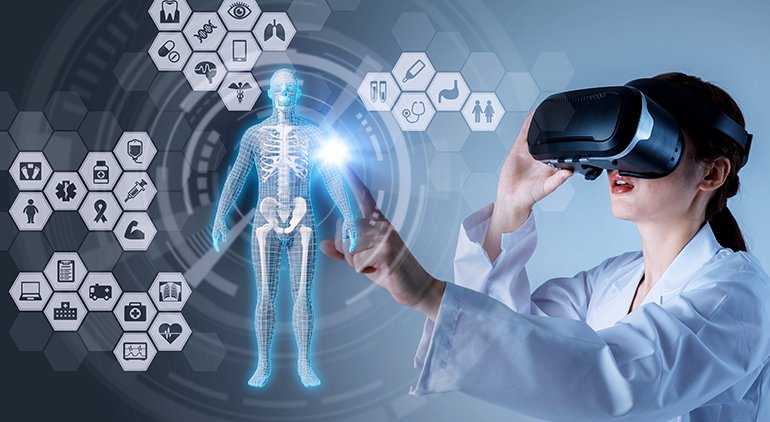
Simulation, virtual reality (VR) and augmented reality (AR) will grow out of the niche into mainstream. VR simulations can impart code training, trauma training, or infrequent crisis training to teams without putting patients in danger. AR overlays have the potential to aid anatomy review or procedure rehearsal. In conjunction with this, social and collaborative CME, virtual journal clubs, global case conferences, specialty discussion boards, etc., will render learning more conversational. Clinicians will not only consume content, but they will co-create and criticize it with peers around the globe.
AI, Data, and Continuous Feedback
Artificial intelligence will assist with the identification of learning requirements by comparing patterns in practice data such as common delays in diagnosis, inconsistency in prescribing, or missing adherence to guidelines. Systems are able to suggest specific modules or simulations based on those patterns. In the long run, Dashboards can demonstrate clinicians how their learning activities are related to better metrics, bridging the gap between learning and outcomes. Privacy, bias and transparency guardrails will be critical to ensure trust with the growing adoption of AI.
Equity, Access, and Global Reach
Digital CME reduces barriers to clinicians in rural, low-resource or overburdened environments. To make that promise come true, mobile-first design, offline access, and multilingual content will become necessary. Professional organizations will be required to establish quality and independence criteria, where commercial interests will not easily take over the online mediums that are easy to scale. When properly done, the digital future of CME can be used to bridge the knowledge gap across the world as opposed to widening it.
The way ahead is simple, continuous, workflow integrated, and measured by its practical effect. By bending into these changes today, clinicians and educators will create a more intelligent, more responsive medical learning system.