

The landscape of cancer diagnosis is ever-evolving, driven by the need for precision, accuracy, and timely results. Pathologists and healthcare professionals face the critical challenge of not just identifying malignant cells, but also characterizing them to inform treatment strategies. One cornerstone technique that has profoundly shaped our ability to achieve this is immunohistochemistry (IHC).
IHC provides invaluable insights into cellular characteristics, helping to differentiate between various tumor types, pinpoint their origin, and even predict their response to therapy. It’s an essential tool in the pathologist’s arsenal, allowing for detailed molecular profiling of tissue samples. We understand the demands placed on healthcare professionals to stay current with these sophisticated diagnostic methods, which is why we continually offer practical and evidence-based educational programs. For instance, understanding the nuances of how these techniques integrate with modern workflows, such as those discussed in our article on Digital Pathology: The Future of Surgical Pathology Practice, is critical.
At Educational Symposia, we’ve been operating since 1975, providing quality and accredited learning opportunities designed for real-world application. We’re dedicated to ensuring physicians experience trusted and high-quality educational experiences that will promote certification, clinical excellence, and lifelong learning, especially in rapidly advancing fields like pathology. Our focus today is on updated protocols and practical considerations for immunohistochemistry in cancer diagnosis, a technique central to many diagnoses, including those for prostate cancer, breast cancer, and colorectal cancer.
What is Immunohistochemistry in Cancer Diagnosis?
Immunohistochemistry (IHC) is a laboratory technique that utilizes specific antibodies to detect antigens (proteins) in cells of a tissue section. By visualizing these specific proteins, pathologists can identify cell types, differentiate between benign and malignant lesions, classify tumors, and assess prognostic and predictive markers. It’s a powerful tool that adds a molecular layer to traditional histopathological examination.
In pathology, IHC is indispensable. It’s often employed when routine hematoxylin and eosin (H&E) staining doesn’t provide sufficient information for a definitive diagnosis. For example, distinguishing between certain types of poorly differentiated tumors, like carcinomas, lymphomas, and sarcomas, can be incredibly challenging without the specific protein markers revealed by IHC. The ability to identify these markers helps guide clinicians toward the most effective treatment pathways for patients with various cancers, from prostate cancer to pancreatic cancer.
Our experience, spanning over 50 years in medical education, underscores the evolving role of IHC. What began as a research tool has become a routine diagnostic procedure, influencing millions of patient outcomes annually. We’ve seen firsthand how crucial it is for pathologists to master its application.
How Does Immunohistochemistry Work?
The fundamental principle of IHC involves the highly specific binding of an antibody to an antigen within a tissue sample. The process typically begins with preparing tissue sections from biopsies or surgical resections, which are then mounted on slides. These sections are treated to expose the target antigens, followed by incubation with primary antibodies designed to bind specifically to those antigens. A secondary antibody, conjugated with an enzyme or fluorophore, then binds to the primary antibody, making the antigen-antibody complex visible under a microscope after adding a chromogen substrate.
This multi-step process requires meticulous attention to detail at every stage, from tissue fixation and processing to antibody selection and chromogen development. Each step is a potential point for error or variability, emphasizing the importance of standardized, robust protocols. The precision of this technique allows for the detection of minute quantities of protein, making it exceptionally sensitive. For instance, in our practice, we’ve observed how carefully optimized protocols are essential for consistently accurate results in diagnostic challenges like distinguishing different subtypes of breast cancer, which have significant therapeutic implications.
Does IHC Test Mean Cancer?
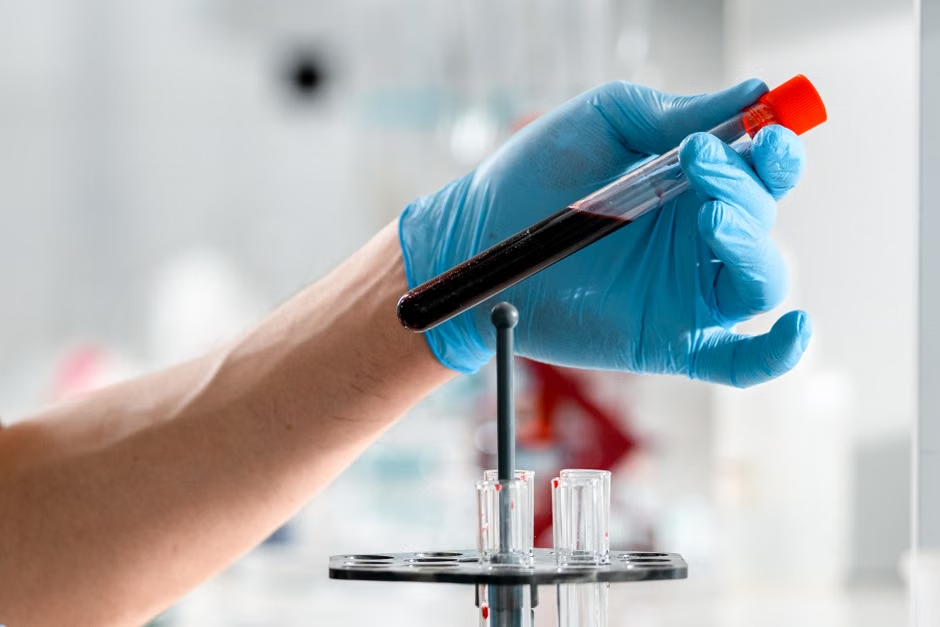
An IHC test itself does not directly *mean* cancer. Rather, it provides crucial additional information about a tissue sample that helps pathologists confirm or exclude a cancer diagnosis, classify its type, and predict its behavior. While certain IHC findings can be highly indicative of malignancy, the results are always interpreted in conjunction with a patient’s clinical history, imaging findings, and conventional histopathological examination.
For example, in the context of prostate cancer, a positive staining for prostate-specific antigen (PSA) or prostate-specific acid phosphatase (PSAP) by IHC in a suspicious lesion would support a diagnosis of prostate carcinoma. However, these markers might also be present in some benign conditions, albeit typically with different patterns or intensities. Conversely, the absence of expected markers can help rule out certain cancers or confirm a benign lesion. Pathologists, leveraging their extensive training, integrate all these data points to arrive at a conclusive diagnosis. As board-certified providers recommend, a holistic view is always paramount.
“Immunohistochemistry provides critical insights into tumor biology, allowing for more precise classification and guiding personalized treatment plans. However, it’s a diagnostic aid, not a standalone test; its results must always be interpreted in the full clinical and morphological context.”
What Are the Advantages and Disadvantages of Immunohistochemistry?
Immunohistochemistry offers significant benefits in diagnostic pathology but also comes with certain limitations that pathologists must consider.
Advantages of IHC:
- Specificity: IHC can detect specific proteins, providing highly detailed molecular information about cells and tissues that traditional stains cannot.
- Sensitivity: It can identify low concentrations of antigens, aiding in the diagnosis of minimal residual disease or small tumor foci.
- Tumor Classification: IHC is invaluable for distinguishing between different types of poorly differentiated tumors (e.g., adenocarcinomas, lymphomas, sarcomas) and identifying the primary site of metastatic cancers.
- Prognostic and Predictive Markers: It helps identify markers that predict tumor behavior (prognosis) and response to specific therapies (prediction), such as HER2 status in breast cancer or PD-L1 in lung cancer.
- Tissue Preservation: IHC can be performed on formalin-fixed, paraffin-embedded tissue, allowing for retrospective studies and diagnosis from archived samples.
Disadvantages of IHC:
- Technical Complexity: The procedure is multi-step and requires skilled personnel, standardized protocols, and proper controls to avoid false positives or negatives.
- Cost: Reagents and equipment can be expensive, and turnaround time can be longer than routine staining.
- Antigen Variability: Antigen preservation can be affected by tissue handling, fixation, and processing, leading to inconsistent results.
- Subjectivity in Interpretation: While objective markers exist, interpretation of staining intensity and distribution can sometimes be subjective, requiring expert judgment.
- Limited Information: IHC identifies protein expression but doesn’t provide information on genetic mutations or amplifications, which may require additional molecular tests.
Understanding these trade-offs is part of professional growth, and our programs, like our Surgical Pathology Update, are designed to keep practitioners aware of best practices.
What to Look For in Immunohistochemistry Results Analysis
Analyzing IHC results requires a systematic approach, combining visual assessment with a deep understanding of the clinical context and the specific antibodies used. Pathologists look for several key aspects:
- Staining Pattern: Is the staining nuclear, cytoplasmic, membranous, or a combination? The specific location of antigen expression is crucial for interpretation. For example, CDX2 is typically nuclear in colorectal cancer cells.
- Staining Intensity: How strong is the signal? Intensity can range from weak to strong and is often graded semiquantitatively (e.g., 0-3+).
- Proportion of Stained Cells: What percentage of tumor cells exhibit positive staining? This is particularly important for markers like Ki-67 (proliferation index) or hormone receptors in breast cancer.
- Homogeneity vs. Heterogeneity: Is the staining uniform throughout the tumor, or are there areas with different staining patterns? Tumor heterogeneity can have significant implications for targeted therapies.
- Controls: Are both positive and negative controls functioning correctly? Proper controls confirm the validity of the staining reaction and rule out non-specific binding.
We’ve observed that nuanced interpretation, especially in challenging cases of esophageal cancer or stomach cancer, often differentiates an experienced pathologist. Our faculty, who are international leaders in clinical specialties, emphasize that the correlation of IHC findings with H&E morphology and clinical data is non-negotiable. This holistic view is vital for arriving at a precise diagnosis.

Practical Tips for Optimizing Immunohistochemistry Protocols
Achieving reliable and reproducible IHC results hinges on meticulous protocol optimization and strict adherence to best practices. Here are practical tips we advocate for healthcare professionals:
- Standardize Tissue Processing: Consistent fixation time, reagent quality, and processing protocols are paramount. Formalin fixation should ideally be between 6-48 hours for most tissues to prevent over-fixation or under-fixation, which can mask antigens.
- Validate Antibodies Rigorously: Always validate new antibody clones and batches for specificity and sensitivity on known positive and negative controls. Titrate antibodies to determine the optimal dilution for your specific laboratory setup.
- Implement Robust Antigen Retrieval: For many antigens, heat-induced epitope retrieval (HIER) or enzyme-induced epitope retrieval (EIER) is necessary to unmask epitopes that become cross-linked during fixation. Optimize the retrieval solution (e.g., citrate buffer, EDTA buffer) and heating method (e.g., microwave, pressure cooker).
- Control for Non-Specific Staining: Use appropriate blocking reagents (e.g., serum, protein blockers) to prevent non-specific antibody binding to Fc receptors or endogenous enzymes like peroxidase.
- Utilize Multidisciplinary Review: For complex cases, discuss IHC results with clinical colleagues, radiologists, and other pathologists. A consensus approach often leads to the most accurate diagnosis.
- Stay Updated with Guidelines: Regularly consult guidelines from professional organizations (e.g., CAP, ASCO) for established IHC panels and interpretation criteria, especially for markers with therapeutic implications.
Our team, with over a century of combined experience in CME program design, consistently emphasizes the importance of continuous learning and adherence to updated protocols. We know that these details can significantly impact diagnostic accuracy and patient care.
“High-quality immunohistochemistry is achievable through meticulous attention to detail at every step, from tissue handling to interpretation. Pathologists must be diligent in standardizing their protocols and continuously validating their reagents to ensure reliable diagnostic outcomes.”
Suitability of IHC: When to Consider Alternatives
While IHC is a powerful diagnostic tool, it’s not always the sole or best answer. Its suitability often depends on the specific clinical question and available resources. For instance, while IHC is excellent for protein expression, it doesn’t directly detect genetic alterations. In cases where specific genetic mutations, amplifications, or chromosomal translocations are critical for diagnosis or therapy selection, molecular pathology techniques like fluorescence in situ hybridization (FISH), polymerase chain reaction (PCR), or next-generation sequencing (NGS) may be more appropriate or necessary as complementary tests.
For example, in lung cancer, while IHC can help classify the tumor type, the identification of EGFR mutations or ALK rearrangements often requires molecular testing to guide targeted therapies. Similarly, for highly anaplastic tumors with no clear lineage by IHC, broad molecular profiling might uncover oncogenic drivers. We strongly advocate for an integrated diagnostic approach, where IHC works in conjunction with morphology and molecular tests. This ensures the most comprehensive and accurate diagnosis, aligning with the highest academic standards we promote at Educational Symposia.
For pathologies in other specialties, our offerings include advanced topics such as Neuroradiology in Clinical Practice, showing our commitment to cross-specialty educational excellence. We always aim to provide education that is practical and evidence-based, ensuring clinicians have all the tools they need.
Immunohistochemistry remains a cornerstone of modern cancer diagnosis, providing critical insights into the biological nature of tumors. As pathologists, continually updating your knowledge and refining your protocols in this dynamic field is not just a professional obligation, but a pathway to clinical excellence and improved patient care. Our commitment at Educational Symposia is to support this journey through convenient, accessible, and professionally accredited educational programs that keep you at the forefront of diagnostic innovation.