

Expectant parents often experience a mix of anticipation and concern, especially when questions arise about their baby’s health. While routine prenatal ultrasounds offer a general overview, sometimes a more detailed look is needed, particularly when evaluating the most vital organ: the heart. Understanding your baby’s cardiac health before birth can make a profound difference in planning for their care, ensuring early intervention if necessary.
For healthcare professionals, mastering the intricacies of fetal echocardiography is crucial for providing precise prenatal diagnoses and guiding families through complex medical decisions. This specialized imaging technique demands a deep understanding of fetal cardiac anatomy and physiology. It’s an area where continuous learning and clinical excellence are paramount.
At Edu Symp, we’ve been supporting the professional growth of physicians and healthcare professionals since 1975, offering practical and evidence-based CME programs. Our mission is to ensure you have access to trusted and high-quality educational experiences that promote certification, clinical excellence, and lifelong learning. Our Fetal Echocardiography course is one example of our commitment to equipping you with the specialized knowledge needed for today’s medical demands.
What Is Fetal Echocardiography?
Fetal echocardiography is a non-invasive ultrasound scan specifically designed to examine the fetal heart in detail. Unlike a standard prenatal ultrasound, which provides a general view, a fetal echo focuses intently on the heart’s structure, function, rhythm, and blood flow patterns. This detailed assessment helps identify congenital heart defects or other cardiac abnormalities that may require attention before or after birth.
This diagnostic tool uses sound waves to create moving images of the baby’s heart, allowing specialists to visualize its four chambers, valves, and major blood vessels. It provides critical insights that can influence delivery plans and postnatal care strategies. According to the Mayo Clinic, a fetal echocardiogram can confirm or rule out a congenital heart defect, which impacts about 1% of births.

How Is a Fetal Echocardiogram Performed?
A fetal echocardiogram is performed much like a standard prenatal ultrasound. The expectant parent lies on an examination table, and a trained sonographer or maternal-fetal medicine specialist applies a gel to the abdomen. A transducer, a small handheld device, is then moved across the abdomen, emitting sound waves that bounce off the fetal heart and create real-time images on a monitor.
The procedure is painless for both the parent and the baby and typically takes between 30 to 120 minutes, depending on the baby’s position and the complexity of the heart structures needing evaluation. During the scan, the specialist will meticulously examine each part of the heart, including chambers, valves, and the major arteries and veins. They might also use a specialized technique known as a fetal doppler to assess blood flow through the heart and vessels, checking for any blockages or abnormal flow patterns. Our ACCME accredited programs consistently emphasize these practical application techniques for our learners.
“Fetal echocardiography offers a detailed, non-invasive look at the developing heart, providing invaluable information that can guide early intervention strategies and improve outcomes for infants with congenital heart disease.”
Why Might a Fetal Echocardiogram Be Recommended?
A fetal echocardiogram is not a routine screening for every pregnancy but is recommended when specific risk factors or concerns arise during standard prenatal care. These indications can stem from parental history, findings from a routine ultrasound, or other medical conditions affecting the pregnancy.
Board-certified providers often recommend this specialized scan for a range of reasons, including:
- Family history of congenital heart disease: If there’s a parent or sibling with a congenital heart defect.
- Abnormalities on a routine ultrasound: Such as an irregular fetal heart rate, abnormal fluid accumulation, or suspicions of fetal growth restriction.
- Maternal medical conditions: Including pre-existing diabetes, lupus, phenylketonuria, or certain infections during pregnancy.
- Exposure to certain substances: Such as specific medications or, notably, alcohol, which can lead to conditions like Fetal Alcohol Syndrome and associated cardiac defects.
- Advanced maternal age: Although less common, the risk of certain congenital anomalies increases with age.
- Genetic syndromes: If the baby is suspected or known to have a genetic condition like Down syndrome, which often correlates with heart defects.
- Concerns about fetal alcohol syndrome face characteristics: Even subtle facial features can prompt a deeper cardiac investigation.
What to Expect During and After Your Fetal Echo?
The experience of undergoing a fetal echocardiogram is generally straightforward and safe. You’ll typically be asked to lie on your back, though you might be repositioned to get the best views of the baby’s heart. The sonographer will use a warm gel and a transducer to capture images, and you may hear the whooshing sound of the baby’s blood flow if a fetal doppler is utilized.

After the scan, the images will be reviewed by a pediatric cardiologist or a maternal-fetal medicine specialist. Results might be discussed immediately, or you may need to schedule a follow-up consultation. If a defect is identified, the care team will explain the specific condition, its potential impact, and the available management options. This might involve additional monitoring, consultations with other specialists, or planning for specialized care immediately after birth. Our educational programs prepare professionals to communicate these complex findings with clarity and empathy.
When Is a Fetal Echo Most Effective?
Fetal echocardiography is most effective between 18 and 24 weeks of gestation, when the fetal heart is developed enough for detailed visualization, but there’s still ample amniotic fluid to provide clear images. Scans performed earlier, such as a fetal echo test at 22 weeks, or later, like a fetal echo at 26 weeks, are common and can still yield valuable information depending on the clinical context.
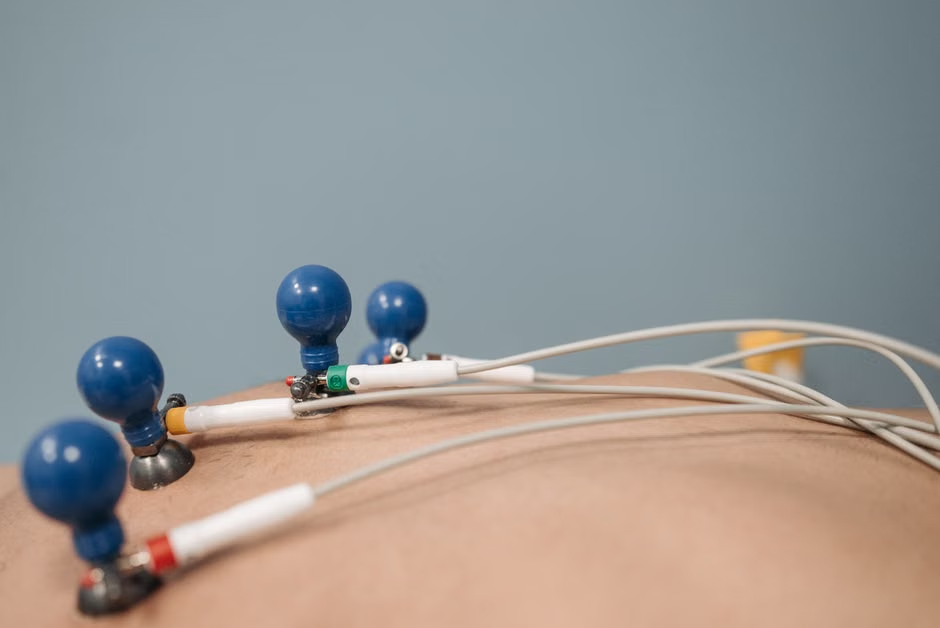
While standard obstetric ultrasounds can identify some major cardiac anomalies, they don’t provide the same level of detail as a dedicated fetal echocardiogram. It’s important to differentiate this from an EKG, or electrocardiogram, which measures the electrical activity of the heart. While an EKG is critical for assessing arrhythmias and other electrical issues in born individuals, echocardiography, particularly fetal echocardiography, excels in visualizing the heart’s physical structure and function. For complex cases, these diagnostic tools are complementary, each offering unique insights. At Edu Symp, we emphasize understanding the specific indications for each diagnostic modality.
“The high resolution and detailed assessment provided by fetal echocardiography are critical for early detection of congenital heart defects, allowing for better prenatal counseling and improved postnatal outcomes.”
Understanding Fetal Echocardiogram Results and Next Steps
Receiving the results of a fetal echocardiogram can be an anxious time. If the results are normal, it provides significant reassurance regarding your baby’s cardiac health. If a congenital heart defect or other abnormality is detected, the next steps will depend on the specific diagnosis, its severity, and its potential impact on the baby’s health.
The care team, often including a pediatric cardiologist, a maternal-fetal medicine specialist, and genetic counselors, will develop a personalized management plan. This might include closer monitoring throughout the pregnancy, consultations with neonatal specialists, and planning for delivery at a facility equipped to handle complex cardiac cases. In our practice, we have seen that a clear, realistic timeline for management and follow-up, devoid of hype, helps families prepare effectively. Sometimes, intervention might be necessary shortly after birth, while other conditions may be managed with ongoing observation. The goal is always to optimize the baby’s health and ensure the best possible start to life.
Practical Considerations for Referring Physicians and Patients
For referring physicians, understanding the indications and benefits of fetal echocardiography is key to optimal patient care. For patients, being informed about the process and potential outcomes can alleviate anxiety. Here are some practical tips:
- Identify risk factors early: Screen all expectant parents for family history, medical conditions, or other factors that might warrant a fetal echo.
- Communicate clearly: Explain why the scan is being recommended, what it involves, and what types of information it can provide.
- Timely referrals: Ensure referrals for fetal echocardiograms are made within the optimal gestational window (18-24 weeks) to facilitate clear imaging and allow ample time for decision-making.
- Prepare for the appointment: Advise patients that the scan can take a while and that fetal position can sometimes necessitate breaks or repeat visits for optimal views.
- Multidisciplinary team approach: For complex diagnoses, ensure coordination with a team of pediatric cardiologists, geneticists, and neonatologists to provide comprehensive care. This kind of integrated approach is something we often discuss in our programs and in our ESI Management services for healthcare organizations.
- Focus on reassurance: Remind parents that many fetal heart findings are benign or manageable, and a detailed scan is a proactive step towards their baby’s health.
Fetal echocardiography represents a significant advancement in prenatal care, offering unparalleled insight into the developing fetal heart. For physicians and healthcare professionals, staying current with these diagnostic techniques and their clinical implications is essential for delivering the highest standard of care. At Edu Symp, we are committed to providing the educational resources and accredited learning opportunities you need to master these complex areas, ensuring you’re prepared to make informed decisions that positively impact patient outcomes and foster lifelong learning.